
Collecting · 5 min read
What a Limited Edition Print Actually Means
The term is used loosely enough to be almost meaningless. What it means here, and how to tell a real edition from a marketing one.
"Limited edition" is one of the least regulated phrases in art sales. There's no standard behind it, no body enforcing it, and no requirement that the number mean anything in particular. Which means the only useful question is: limited how, exactly?
The short version. Here it means 50 pieces of an image, total, across every size and every finish combined. Then it's retired permanently. One Artist's Proof exists outside that 50. Every piece is numbered and comes with a matching signed certificate.
The question that separates a real edition from a marketing one
Ask: fifty of what?
An edition of 50 that means "50 pieces of this image, full stop" is a genuine constraint. An edition of 50 per size, across six sizes and four finishes, is 1,200 pieces wearing the language of scarcity. Both get advertised the same way. The second is far more common than the first.
Mine are the first kind. Fifty total for an image — every size, every finish, combined. When the fiftieth sells, that photograph is retired and never offered as a print again. A few signature images are released in smaller editions than 50, never larger.
What to actually check
- Is the edition per image, or per size/finish? The single most important question, and the one least often answered clearly.
- Is there an "open edition" version too? Some sellers run a limited edition alongside unlimited smaller prints of the same image. That's not dishonest, but it changes what you own.
- What happens when it closes? Retired permanently, or reissued later in a different size or a "new" edition?
- Is there a certificate, and does it match the piece? A numbered print with an unnumbered certificate isn't provenance, it's paperwork.
The Artist's Proof
Outside the edition of 50, I keep a single Artist's Proof of each image. This is a long-standing convention from printmaking, where proofs were the impressions pulled while the artist was still adjusting the plate — kept by the artist, outside the numbered run.
One per image, not a second edition hiding behind an abbreviation. It's occasionally available by private request, at a premium. Worth being alert to this generally: "AP" is sometimes used to quietly add another 10–20% to an edition's real size.

Numbering, certificates and provenance
Every piece is numbered and ships with a matching signed and numbered Certificate of Authenticity. Paper prints are signed by hand before they leave; the face-mounted pieces travel straight from the lab to you, so the certificate carries the signature rather than the panel — signing the face of a finished acrylic piece would mean unmounting it.
I keep records of every sale, including the file used to produce it. If a piece is ever damaged beyond repair, that record is what makes a replacement possible.
Price steps up as an edition sells down
The price you see on the site is the release price, which applies to the first ten pieces of an edition. After that the price steps up as the edition sells: 10%, 20%, 35%, and 50% above release at each further tenth. The earliest pieces carry the lowest price, and your quote confirms the price in effect for that image.
Why I don't show a sold counter
Plenty of sites display "37 of 50 remaining." I've deliberately chosen not to, and I'd rather explain why than have it look like an omission.
A counter only creates urgency once an edition is already selling well. Before that — which for most images is most of the time — it just advertises that nobody has bought this one, which is both discouraging and largely meaningless. An image can be excellent and unsold simply because fewer people have seen it. I don't want a number on the page quietly arguing against a photograph I believe in.
So the site shows the release price and nothing else. If you want to know how far into an edition a particular image is, ask me and I'll tell you honestly.
Is a limited edition print an investment?
I'm going to give you the boring answer, because the exciting one would be a sales pitch: buy it because you want to live with it.
A limited edition is a guarantee about scarcity — that no more will be made. It is not a prediction about value, and anyone who tells you otherwise about contemporary photography is speculating. What the edition genuinely buys you is that the thing on your wall stays uncommon, that it can't be reproduced into meaninglessness, and that it has documented provenance if it ever changes hands. That's worth something real. It just isn't a return.
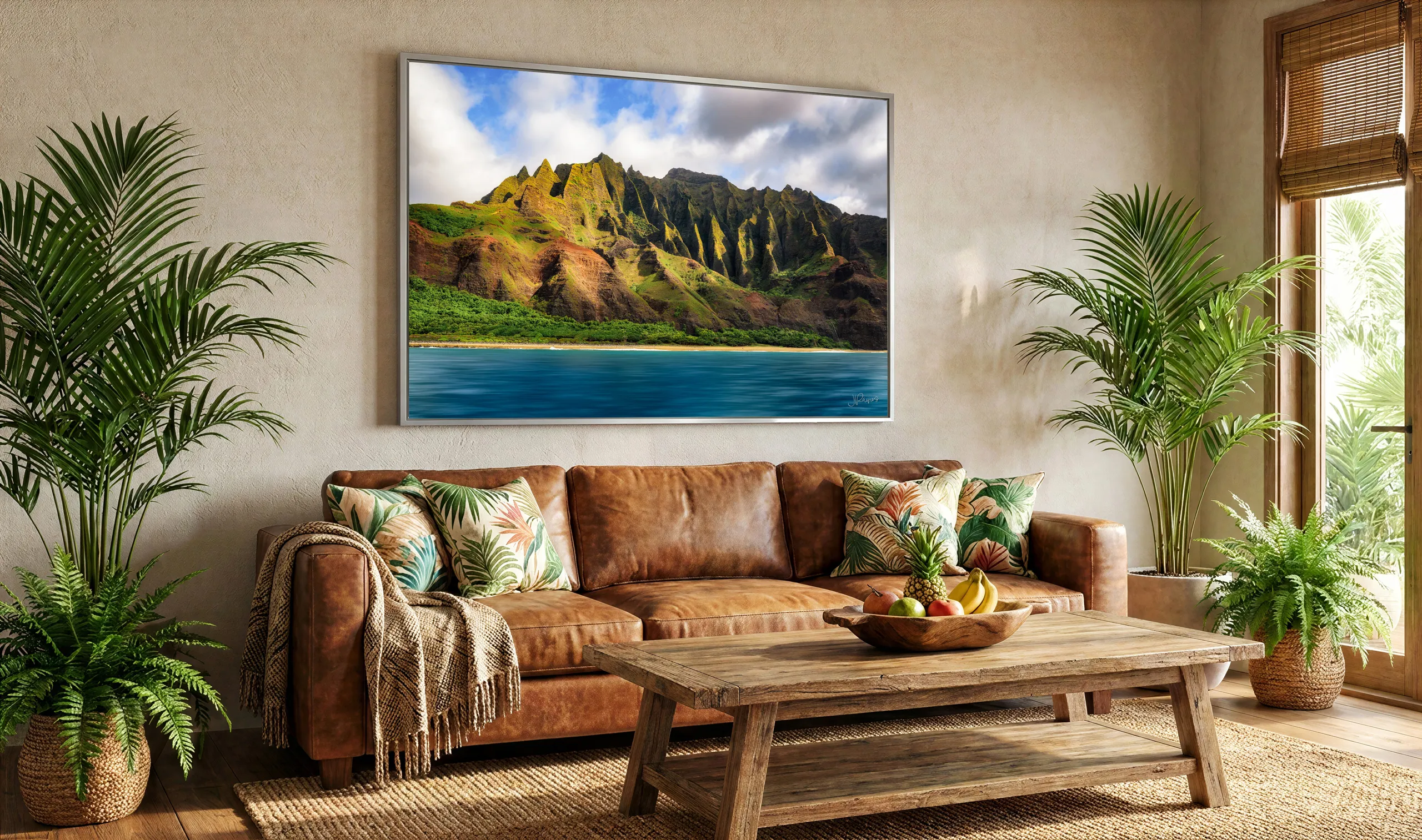
If you're weighing a specific image
Ask me where the edition stands, whether the size you want is still available in the finish you want, and anything else you'd want to know before committing. None of it is confidential — it just isn't on the page.
Still deciding?
Tell me the image and something about the room — the light, the wall, how close people stand. I'll tell you honestly what I'd hang there, even if it's the cheaper option.
Ask me directlyPrefer email? hello@jeradrainesphotography.com