
Collecting · 7 min read
How to Size a Print for Your Wall
Almost everyone goes smaller than they should. The arithmetic behind picking a size, and where panoramic formats actually belong.
This is the decision people get wrong most often, and they almost always get it wrong in the same direction: too small. It's the one thing I'd fix about how most photographs end up hung in most houses.
The short version. Fill two-thirds to three-quarters of the usable wall. Hang it lower than feels right — around 57 to 60 inches to the center. Tape the outline on the wall and live with it for a day before you order anything.
Why everyone goes too small
Two reasons, and neither of them is taste. The first is that you're judging size on a screen, where a 24 × 36 and a 40 × 60 look identical — both are a rectangle a few inches wide. Nothing about looking at a photograph on a laptop tells you how it will sit on a wall eleven feet away.
The second is that a bigger print feels like a bigger commitment, so the safe choice feels like the smaller one. It isn't. An undersized piece doesn't read as restrained, it reads as tentative — it floats, the wall wins, and the photograph never gets to do anything. Going one size up is the single most common piece of advice I give, and I've never had someone come back and tell me they wished they'd gone smaller.
Same image, same 82-inch sofa, four sizes — rendered from a fixed vantage point so nothing but the print changes between frames.
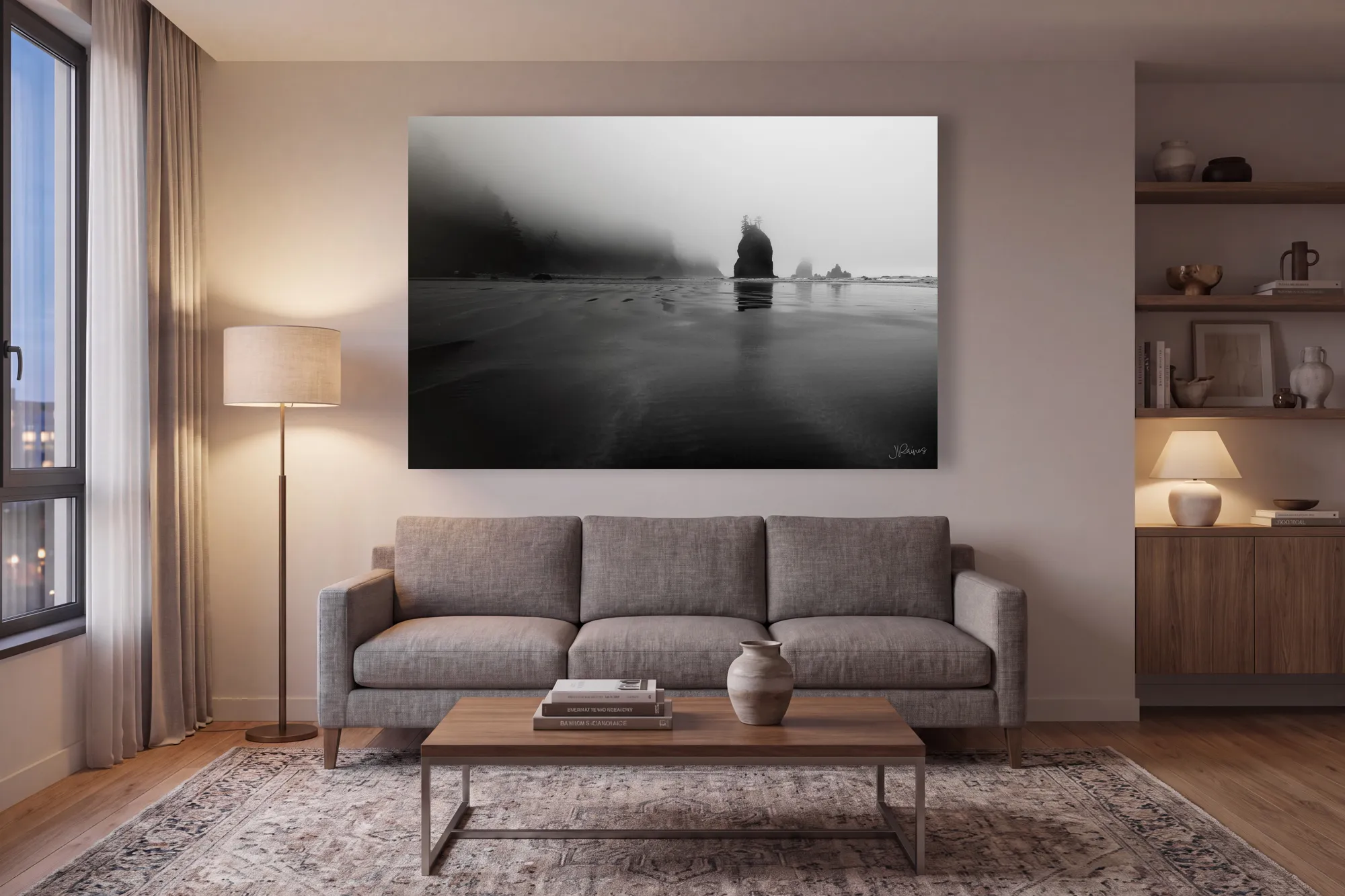
Too large.
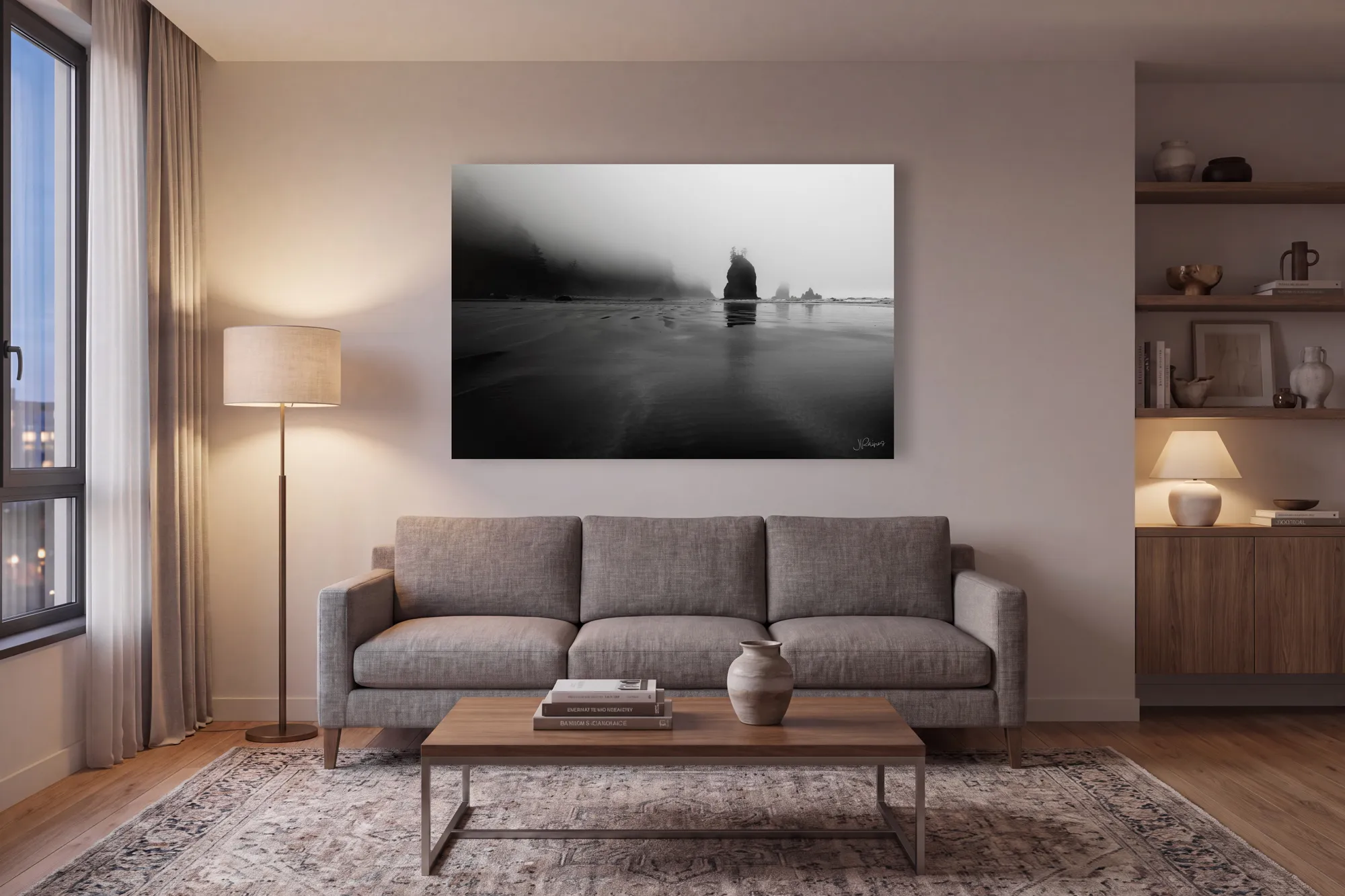
Perfect size.
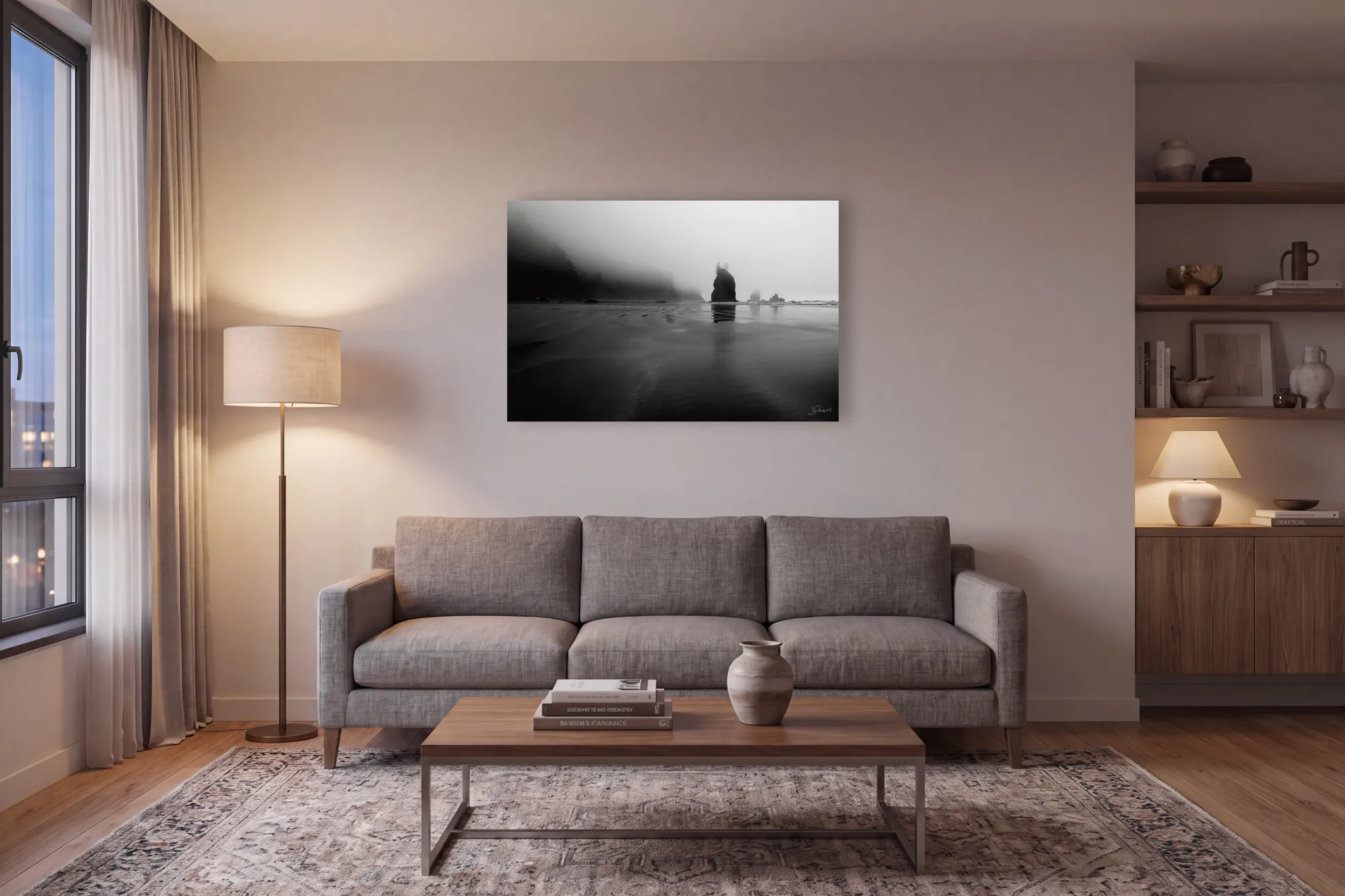
Too small.
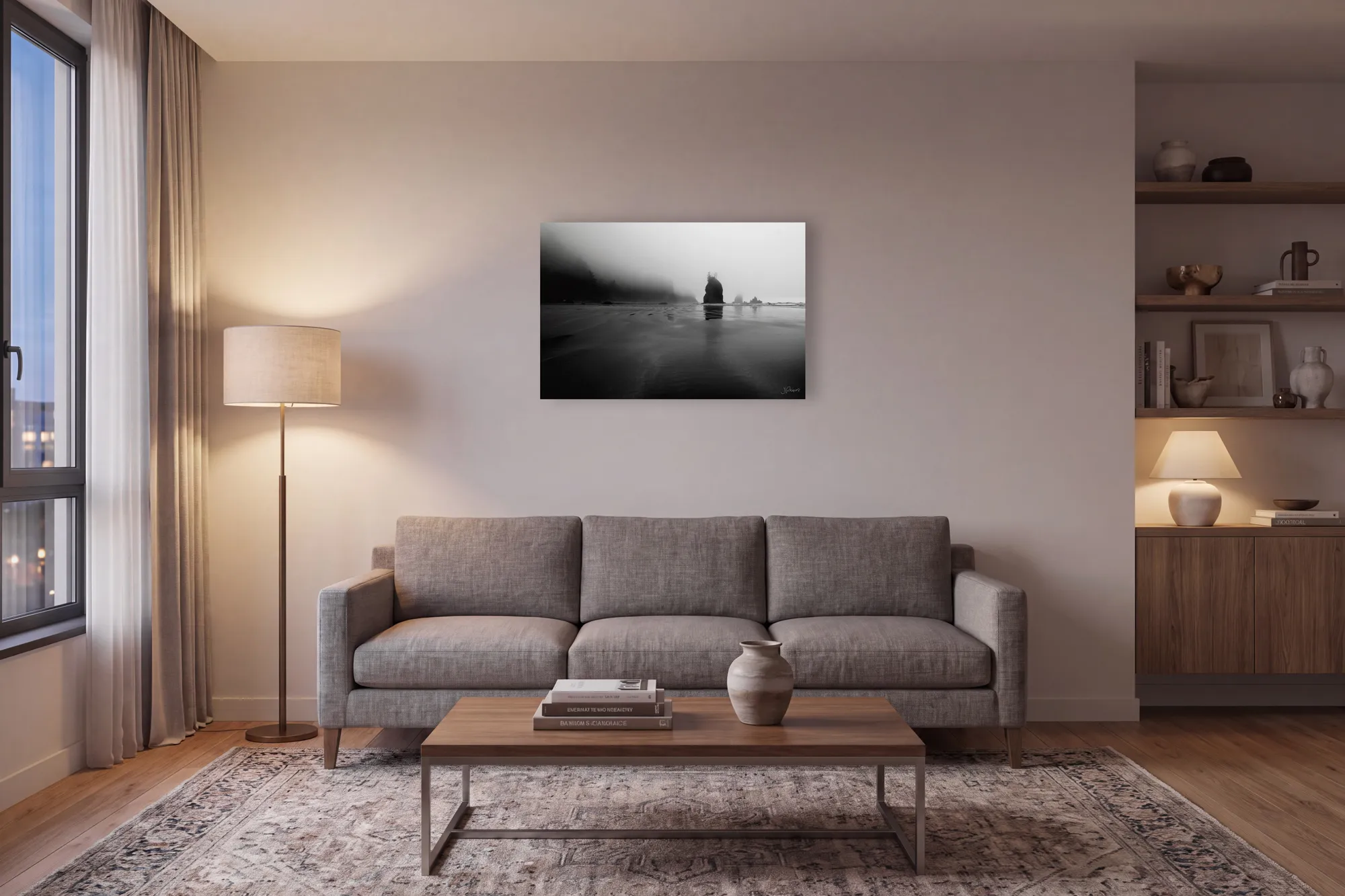
Much too small.
Start with the wall, not the print
Measure the usable width — the clear span you'd actually hang across, not wall corner to wall corner. A doorway, a window frame, the edge of a bookcase, the line where a sofa stops: those are your real boundaries.
Then take two-thirds to three-quarters of that number. That's your target long edge. On a clear ten-foot wall (120 inches) you're looking at roughly 80 to 90 inches of artwork — which usually means the largest piece I make, or a pair. On a more typical six-foot span between two windows (72 inches), you're at 48 to 54 inches, which lands on a 30 × 45 or a 40 × 60.
Standard sizes run to a 72-inch long edge (48 × 72); panoramic goes to 90 inches. Beyond that it's quoted by hand.
Over furniture, the furniture is the wall
Above a sofa, a bed, a console or a desk, the piece isn't relating to the room — it's relating to the thing underneath it. Size it to about two-thirds the width of the furniture at minimum, and hang it six to ten inches above the back of the sofa or the top of the headboard. Closer than that and it feels stacked on top; much further and the two stop reading as a group.
A standard three-seat sofa is around 84 inches. Two-thirds of that is 56 — so a 40 × 60, or a 30 × 60 panoramic, and not the 24 × 36 that most people reach for.
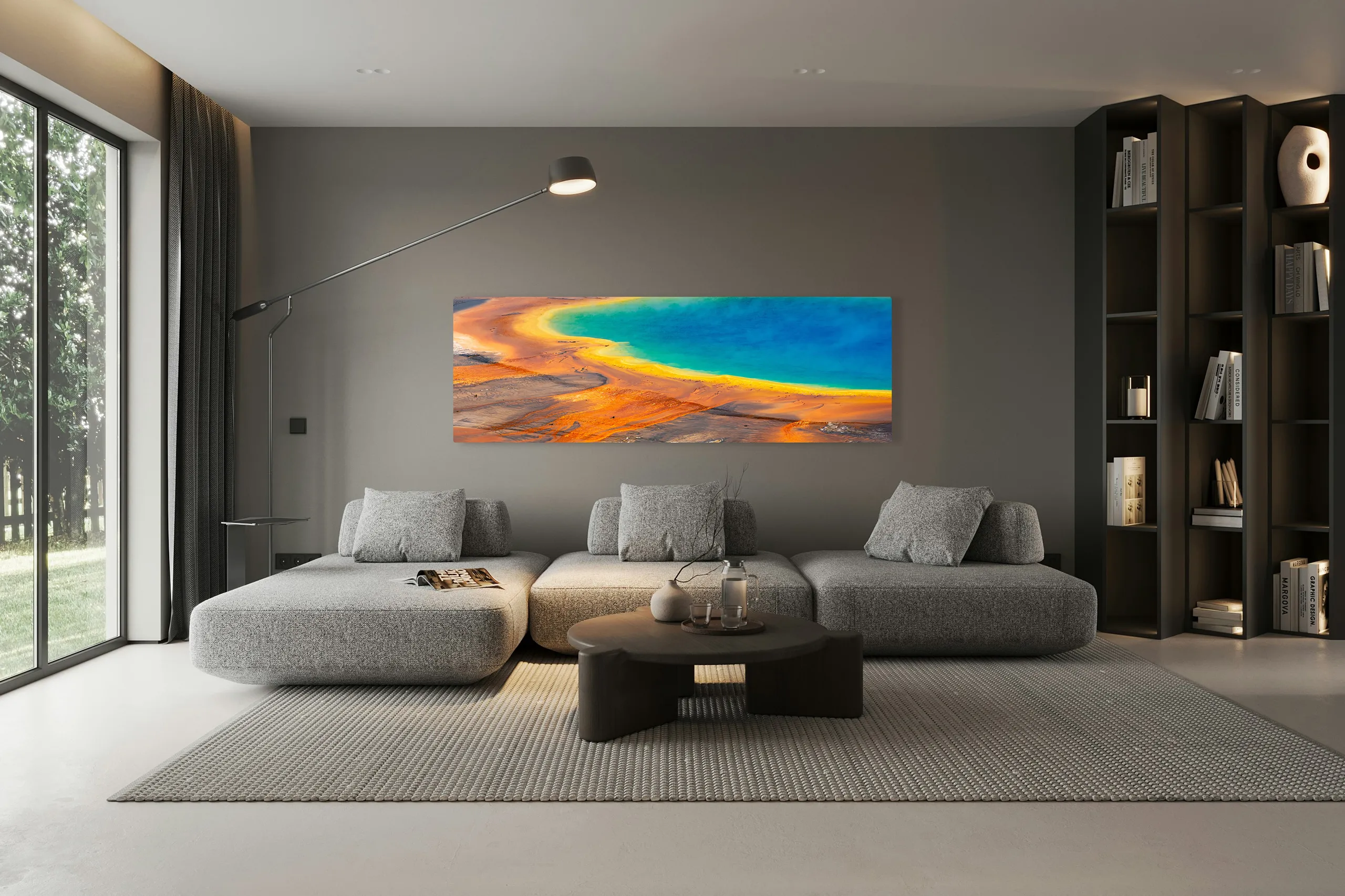
A console or writing desk works the same way at a smaller scale — the piece should still relate to the furniture underneath it, not float free above it.
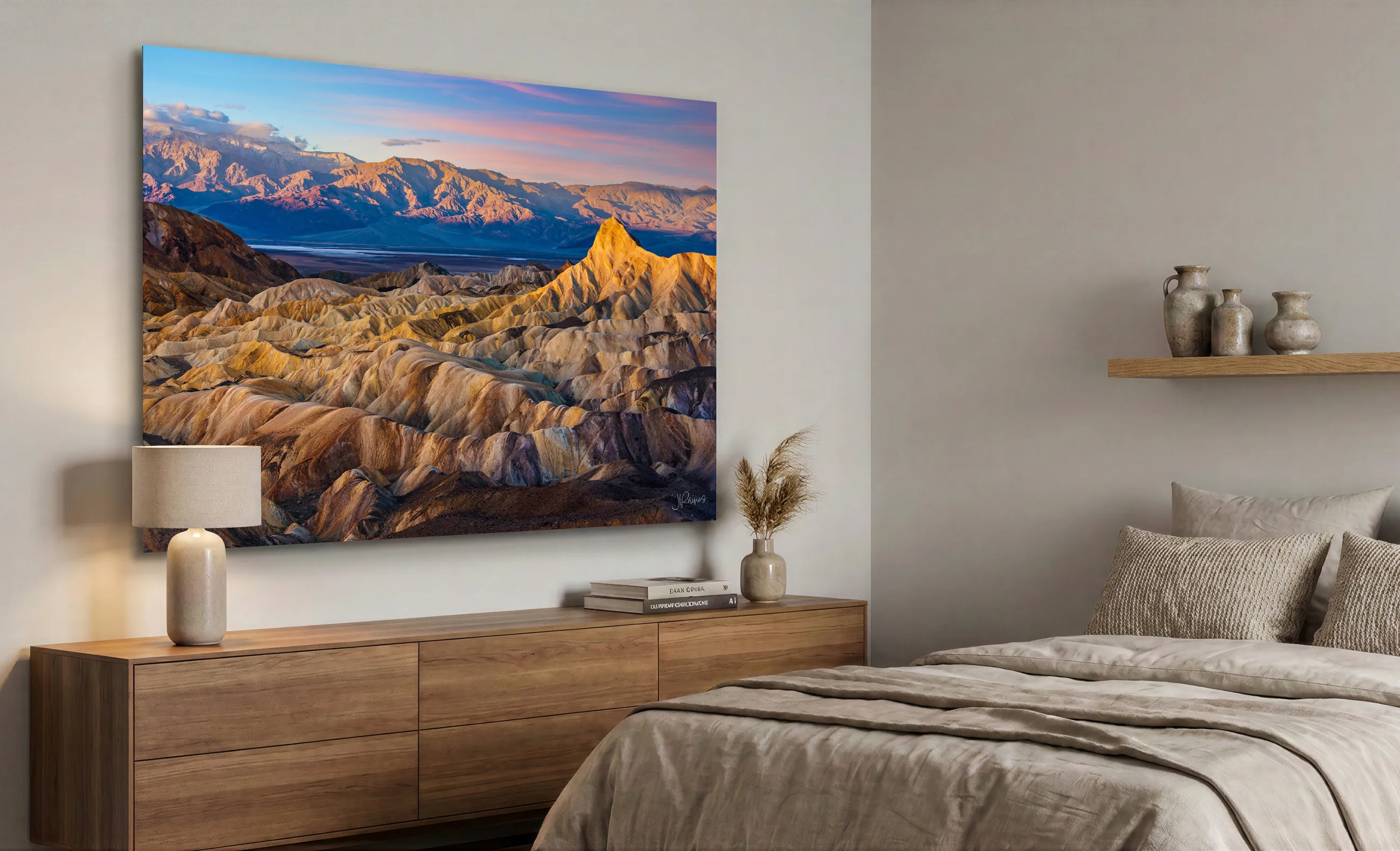
Hang it lower than feels right
Galleries hang to roughly 57 to 60 inches from the floor to the center of the piece, because that's about average standing eye level. Almost every print I see in a home is hung above that, often well above — the instinct is to center it on the wall, and most walls are taller than eye level.
The exception is the one above: when a piece sits over furniture, the furniture governs the spacing and the center may land a little higher. And in a room where people are mostly seated — a den, a dining room — dropping an inch or two below the standard is worth doing.
Account for how far away people stand
A hallway is not a living room. In a corridor or a stairwell people pass within a couple of feet, so the print is experienced up close: texture, fine detail, and surface matter, and a smaller piece can hold its own because it fills the field of view anyway. Across a twenty-foot great room, none of that detail is visible and the only things carrying are scale, tonal mass, and color.
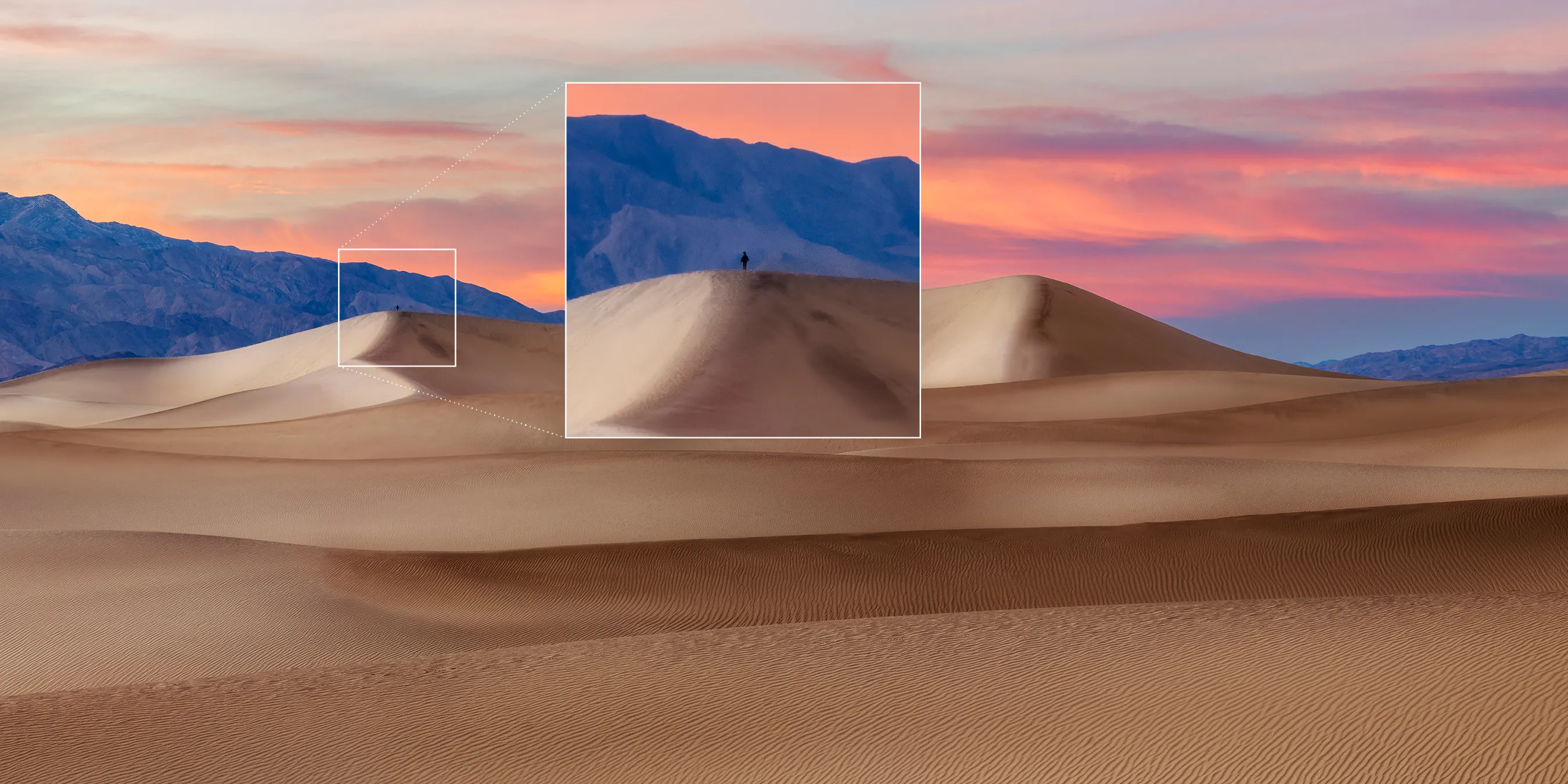
This is also where sizing and finish stop being separate decisions — which surface you choose changes how a piece reads at distance. Luminous finishes carry across a big room in a way matte paper doesn't; matte paper rewards the close look in a way gloss can't.
Tape it out before you decide
This is free, takes ten minutes, and prevents almost all sizing regret. Put painter's tape on the wall in the exact outline of the size you're considering — or better, cut a rectangle of kraft paper or newspaper and tape that up, since a filled shape reads much closer to the real thing than an outline does.
Then leave it there for a day. Walk past it. See it from the doorway, from the sofa, in the morning and with the lamps on. Nearly everyone who does this ends up sizing up from where they started, and the ones who don't at least know why.
Where panoramas actually go
Panoramic is the format I live with — it's what hangs over my desk — and it's also the one people are least sure how to place. The answer is simpler than it seems: a panorama wants a long, low wall. Above a desk. Above a couch. Above a headboard. The stretch of wall running alongside a staircase. Anywhere the space is much wider than it is tall, which is exactly the shape of wall that defeats a conventional frame.

Worth knowing that 2:1 and 3:1 are genuinely different products, not two sizes of the same thing. A 3:1 piece at 30 × 90 is seven and a half feet wide and needs a span to match; a 2:1 at 24 × 48 behaves much more like an oversized standard print. Check the ratio before you fall for a size.
And there's a case almost nobody thinks about: the vertical panorama. A 1:2 frame is the answer to the narrow, tall wall — the strip between two windows, the space beside a door, a powder room, the wall at the turn of a staircase. Those walls usually end up empty because nothing standard fits them.
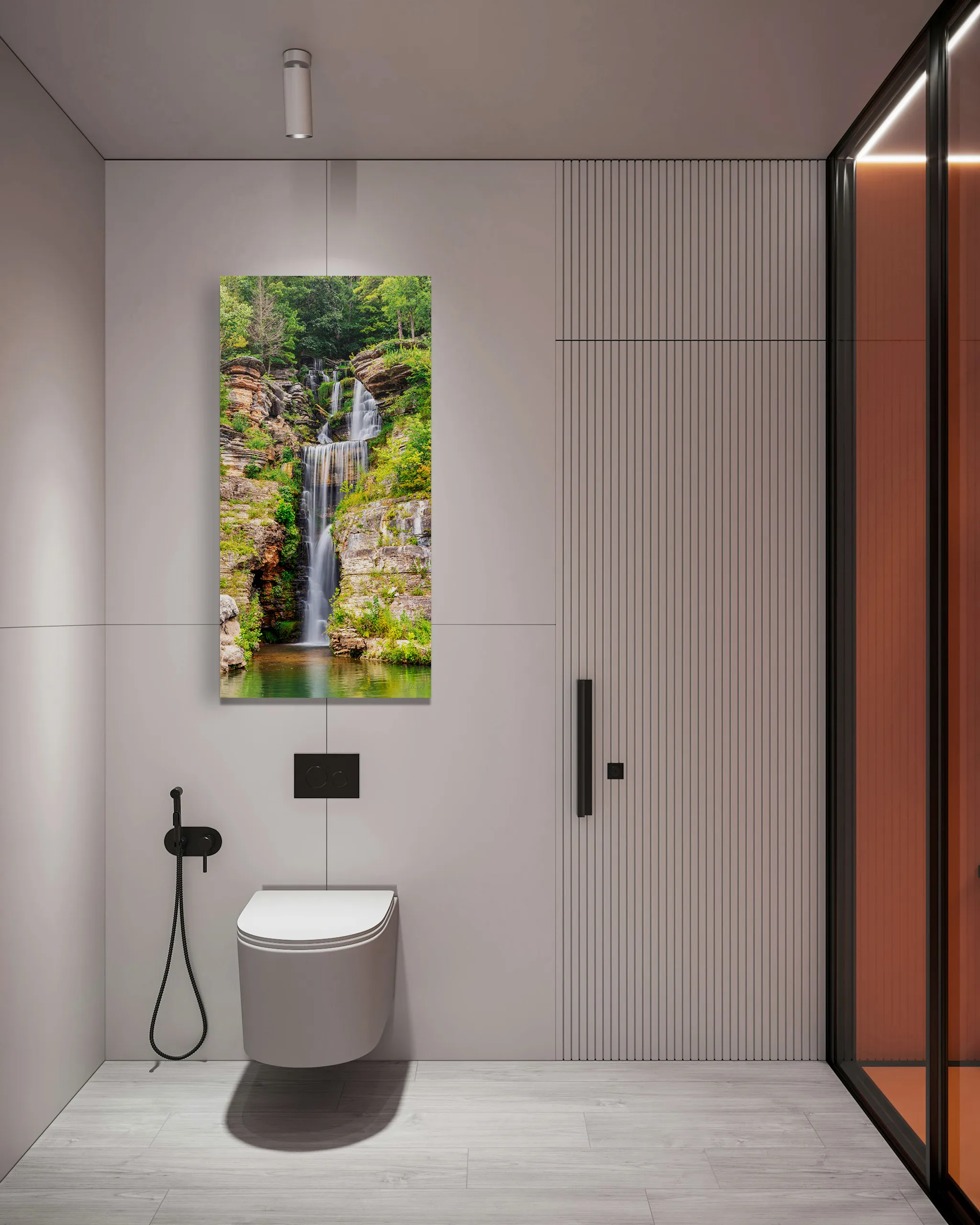
And squares
A square is what you want when the wall isn't especially wide or especially tall — between kitchen cabinets and counter, a small entry, an awkward nook beside a staircase, the space over a nightstand. They also grid well: three squares of the same size in a row read as one deliberate piece rather than three things you happened to own.
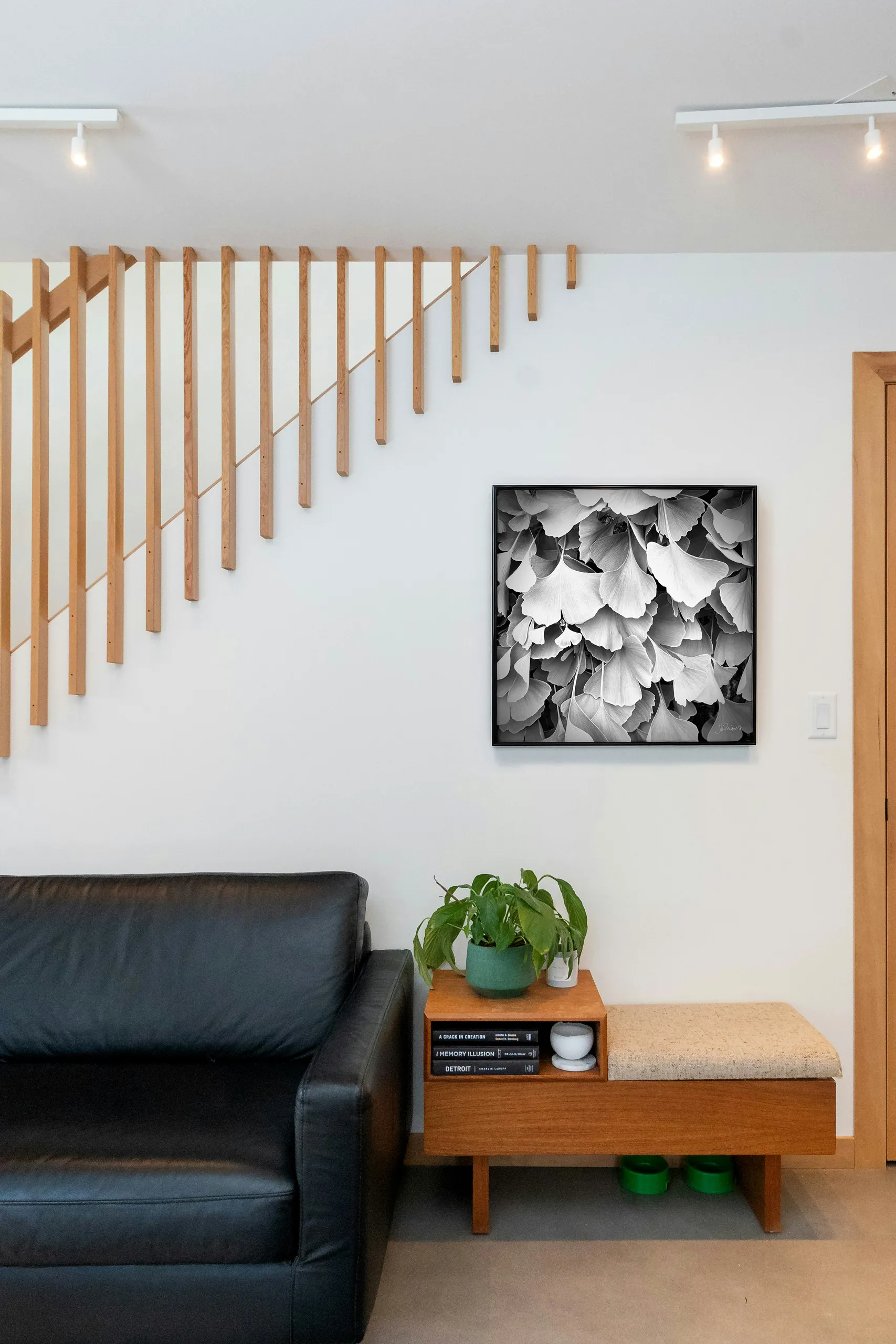
A starting point
Not rules — somewhere to begin before you tape it out. Paper prices shown as the cheapest way to occupy that footprint; every size and finish is on The Prints page.
| Where it's going | Long edge | Try | From |
|---|---|---|---|
| Hallway, small entry, close viewing | 24–36″ | 16 × 24, 24 × 36 | $245 |
| Above a 48″ console or writing desk | 30–36″ | 20 × 30, 24 × 36 | $325 |
| Above a king headboard (~78″) | 48–54″ | 30 × 45, 20 × 40 pano | $625 |
| Above a standard 84″ sofa | 56–60″ | 40 × 60, 30 × 60 pano | $1,110 |
| Open wall, viewed from 12 ft or more | 60–90″ | 48 × 72, 30 × 90 pano | $1,600 |
| Tall narrow wall, stair turn | — | Vertical 1:2 | $290 |
Two things that constrain the top end
Not every image goes to every size. Some files have the resolution and the composition for a genuinely enormous piece and some don't, and I'd rather tell you that than sell you a print that doesn't hold up. If you're reaching for the top of the ladder, ask me about the specific image first.
Past about 40 inches on the long side, pieces ship crated. That's a real jump in freight and handling rather than a surcharge I've invented, and it's the main reason the price ladder steepens at the top. It doesn't change what you should buy — it's just worth knowing that the step from 30 × 45 to 40 × 60 is a bigger step than the inches suggest.
Or just send me the wall
Measure it, take a photo straight on with something in frame for scale, and email it to me with the image you're considering. I'll come back with a mockup at a couple of sizes so you can see it in your actual room, and I'll tell you which one I'd hang. It costs you nothing and it's the part of this I enjoy most.
Still deciding?
Tell me the image and something about the room — the light, the wall, how close people stand. I'll tell you honestly what I'd hang there, even if it's the cheaper option.
Ask me directlyPrefer email? hello@jeradrainesphotography.com